
Odisha Part 6: The Yogini Temple of Hirapur
- Anuradha Shankar
- Jan 21
- 7 min read

I fell in love with this temple the first time I set eyes on it.




Back in 2017, I had been excited to see yet another Yogini temple, when I visited Puri. The resort I was staying at (and writing for), had arranged for a car and driver to take me around. The driver was happy to take me to most of the places I wanted to go, but when it came to Hirapur, he was appalled. He knew of the temple, but had never been there. It was a tantric temple, one not visited by women, and certainly not women travelling alone. He tried to convince me not to go, but my stubbornness and persistence paid off, and he reluctantly agreed when I told him that if he didn’t take me, I would find another driver who would. All along the way, he kept going on about the sinister things that happened at the temple, the tantric rituals that were performed at night…. An Odisha brahmin who took his religious duties very seriously, to the extent of stopping the car to perform the sandhyavandam when he deemed it time, he tried to appeal to my religious side, telling me horror stories of what tantrics did, in his experience. What he did not realize was that my love for art and architecture was far greater than anything he could scare me with. And once my mind was set, there was no way I was turning back. And so we eventually arrived at Hirapur, sometime around noon, on a cool winter day.
The photos I had seen of the temple had not prepared me for just how small the temple was. It looked like a miniature version of a temple! Used as I am to the huge and sprawling temples of South India, many temples appear small, even when they are large by architectural standards. However, this one was something else. See the photo of me standing inside the temple, just to get an idea of just how small this temple is… to give you a sense of context, I am not even 5 ft tall.
Like most other Yogini temples, this one too is circular, and open to the skies. It is believed that this might be one of the earliest Yogini temples, dating back to the 8th century. There is a small central structure with images of Bhairavas, and on the inner walls of the circular structure are the Yoginis. There are 60 on the inner walls, and the remaining 4 are on the central structure. Other than these, there are four Bhairavas, and once there would have been another image of Bhairava, or maybe a linga, inside the central structure. There are also a few sculptures on the external walls. The diameter of the entire temple is just around 25 feet, and each of the Yoginis are about 40cm in height. Yet, they are so detailed, that I could simply stare at them forever. There is little more that I can tell you about the temple. It is simply easier to show you some of the gorgeous Yoginis ….
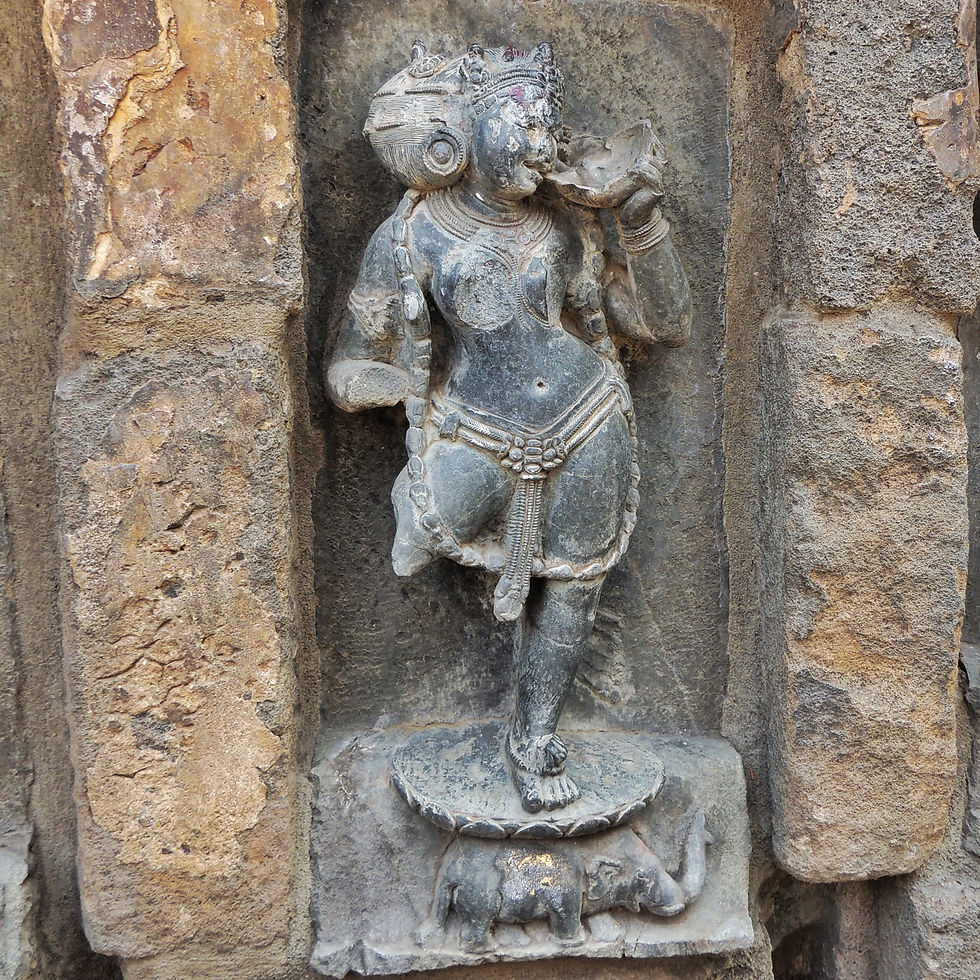
She stands on a lotus over an elephant, and holds a kapala to her lips. The garland around her is weathered, and details aren't clear, but I wouldn't be surprised if it was made up of skulls
She stands on a turtle or tortoise, has multiple arms, and her stands out all around her head...notice how she stands, her feet spread? the pose isn't graceful, but she is.

She stands on a snake, and she's also looking down at something.

Interestingly, she stands on a drum, and not an animal.

She stands on a fish, a large one.. wonder if its a fish or a dolphin?
She has the face of a lion, and is sometimes called Narasimhi... but what is more interesting is that she is standing on what appear to be rocks with greenery interspersed among them, probably depicting a particular kind of terrain.

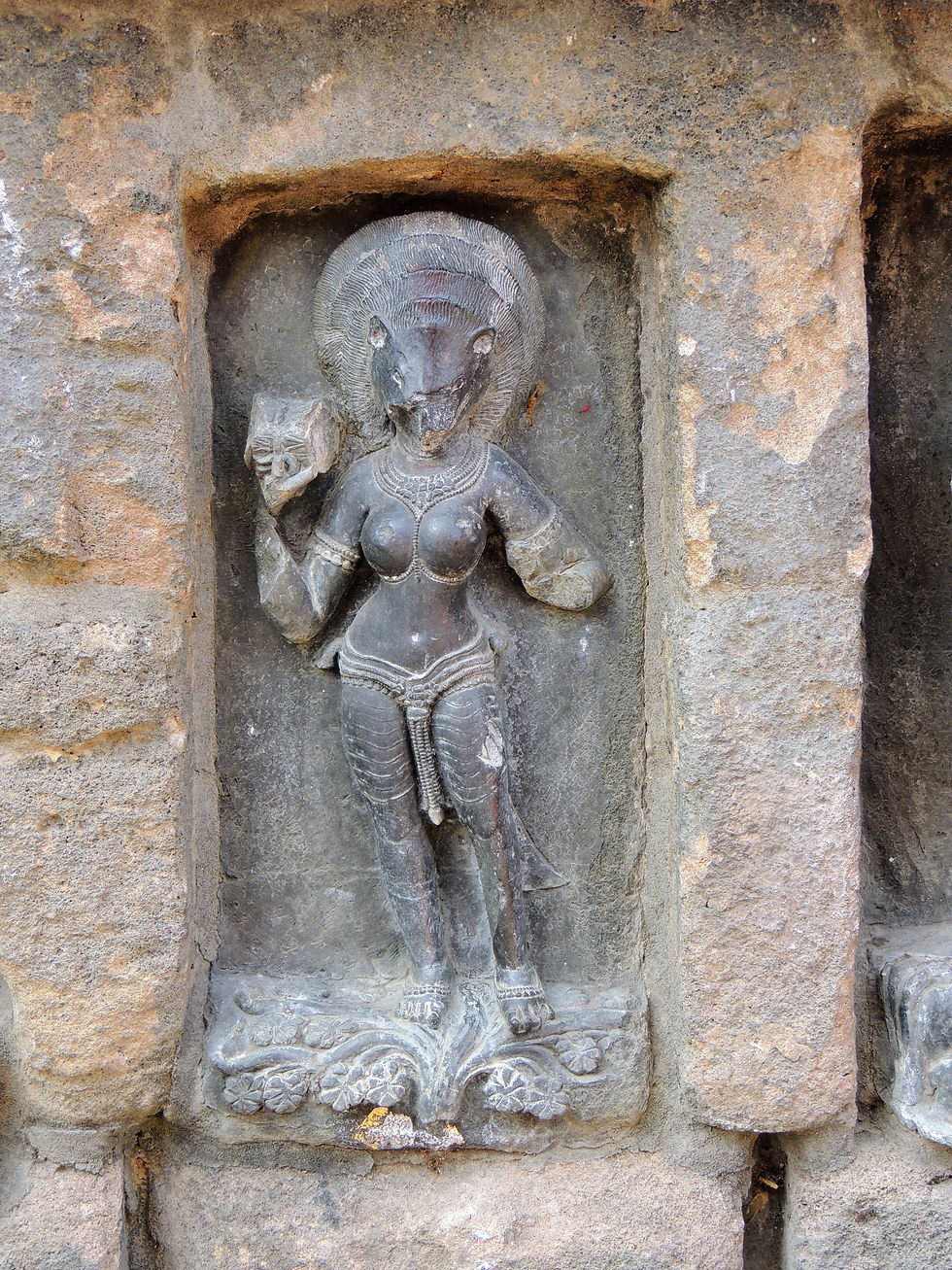
She has the face of an animal I can't quite identify... it looks somewhat like a fox or a wolf.. and she stands on a plant.
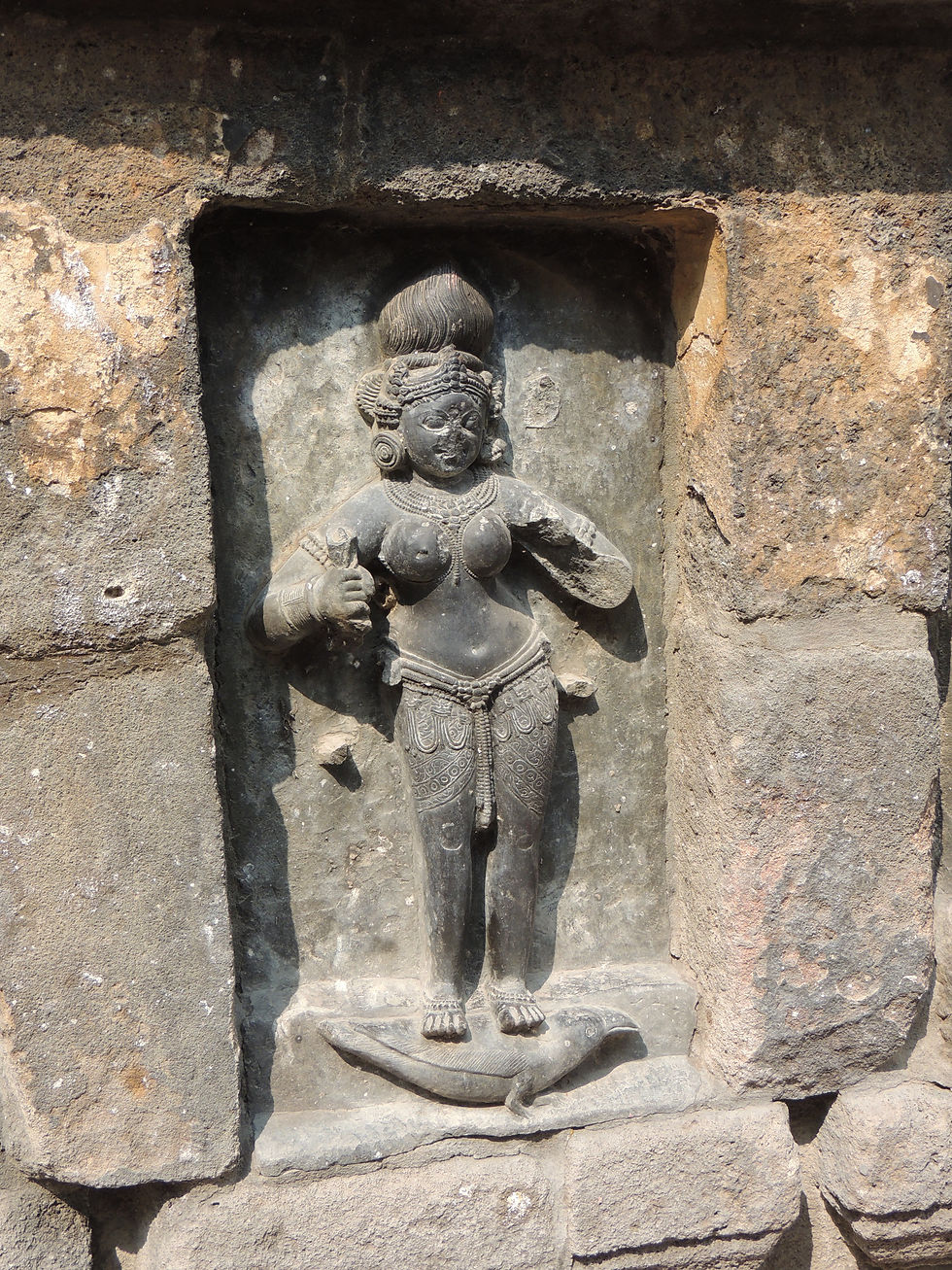
She stands on a bird, most probably a crow
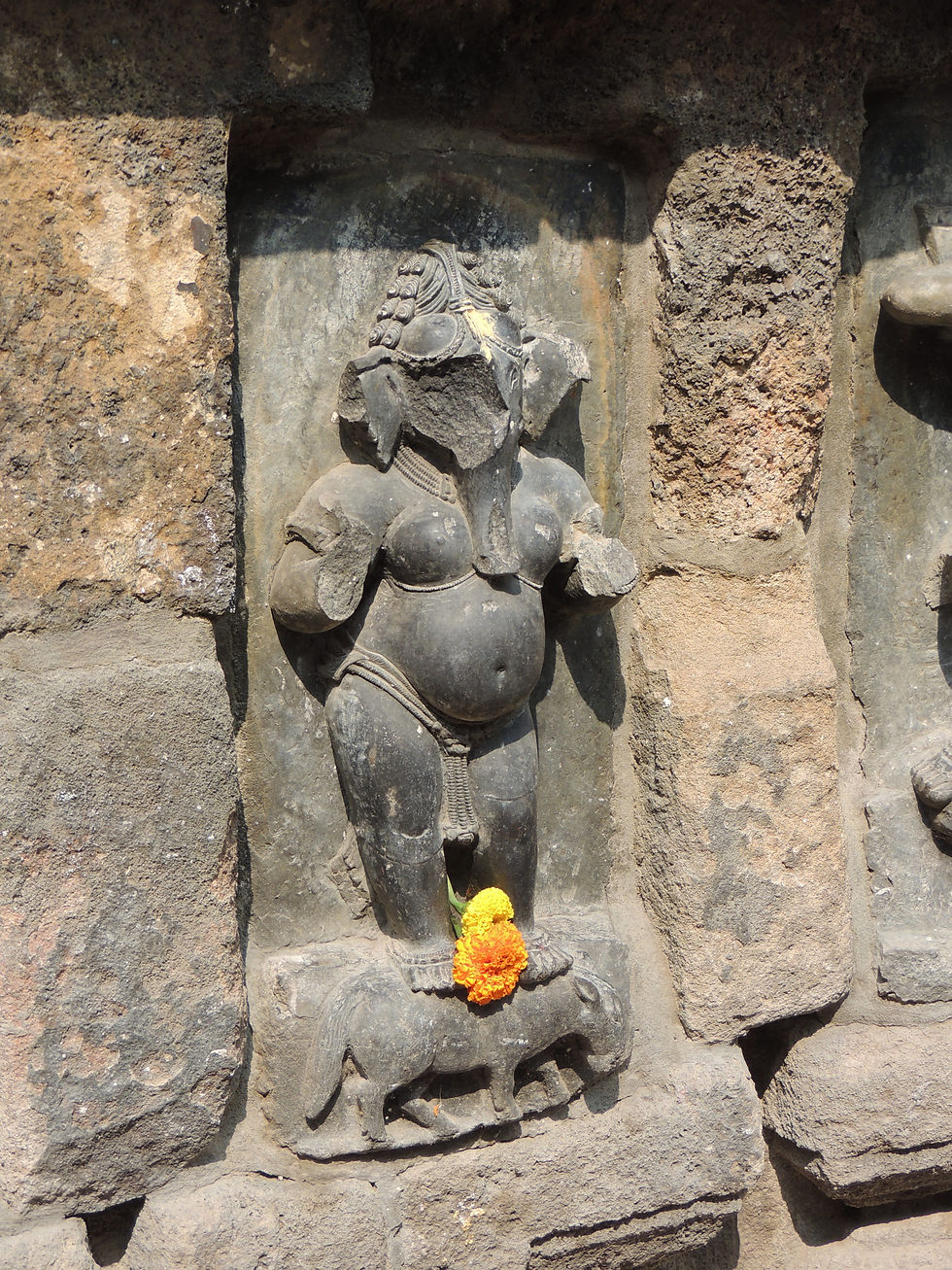
She is sometimes called Ganeshani., since she has the face of an elephant, or Vinayaki. Again, what is interesting is the animal she stands on...
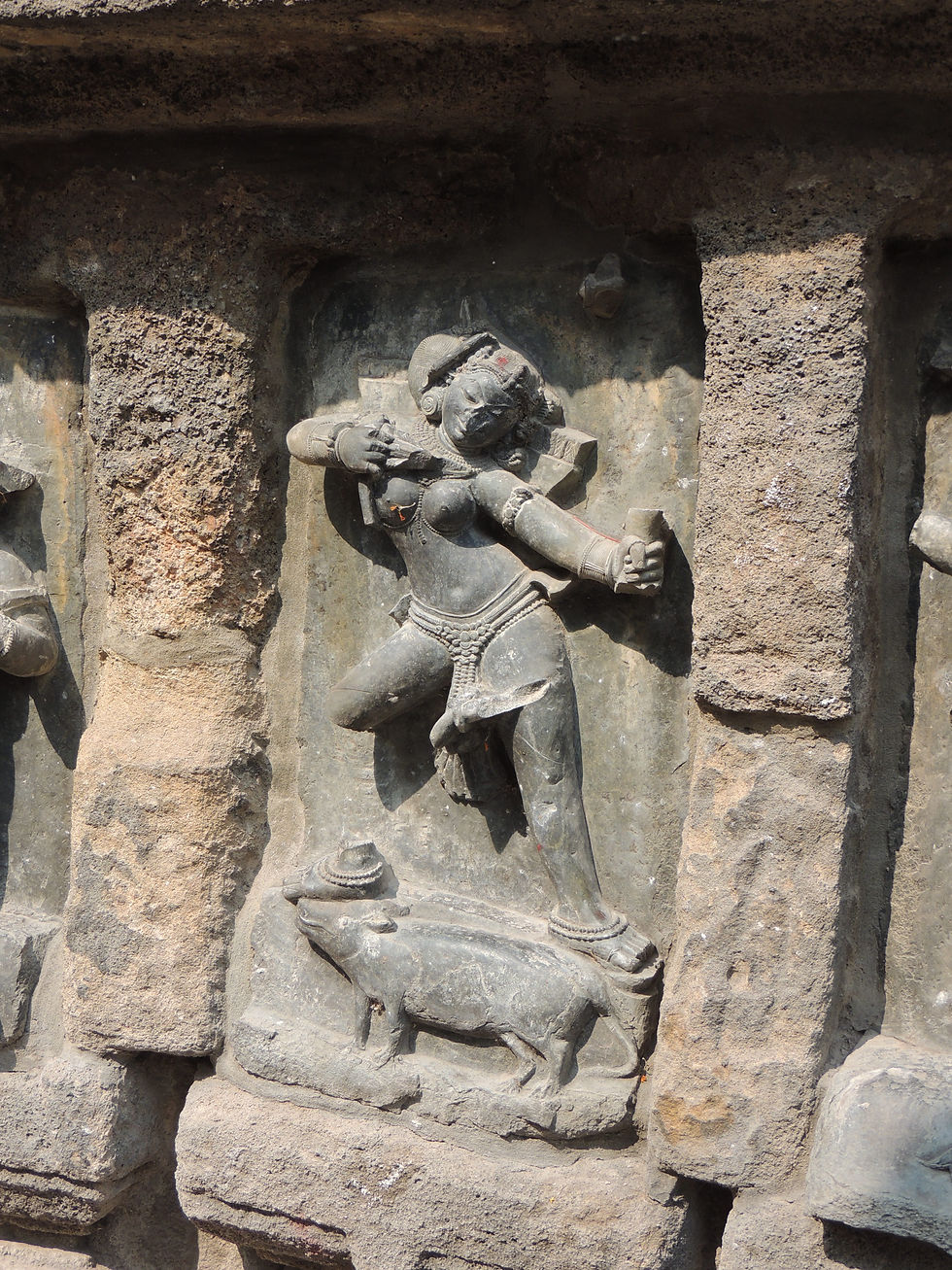
She appears to be a huntress, holding a bow and arrow, ready to shoot... she stands on something that looks like an overgrown rodent.
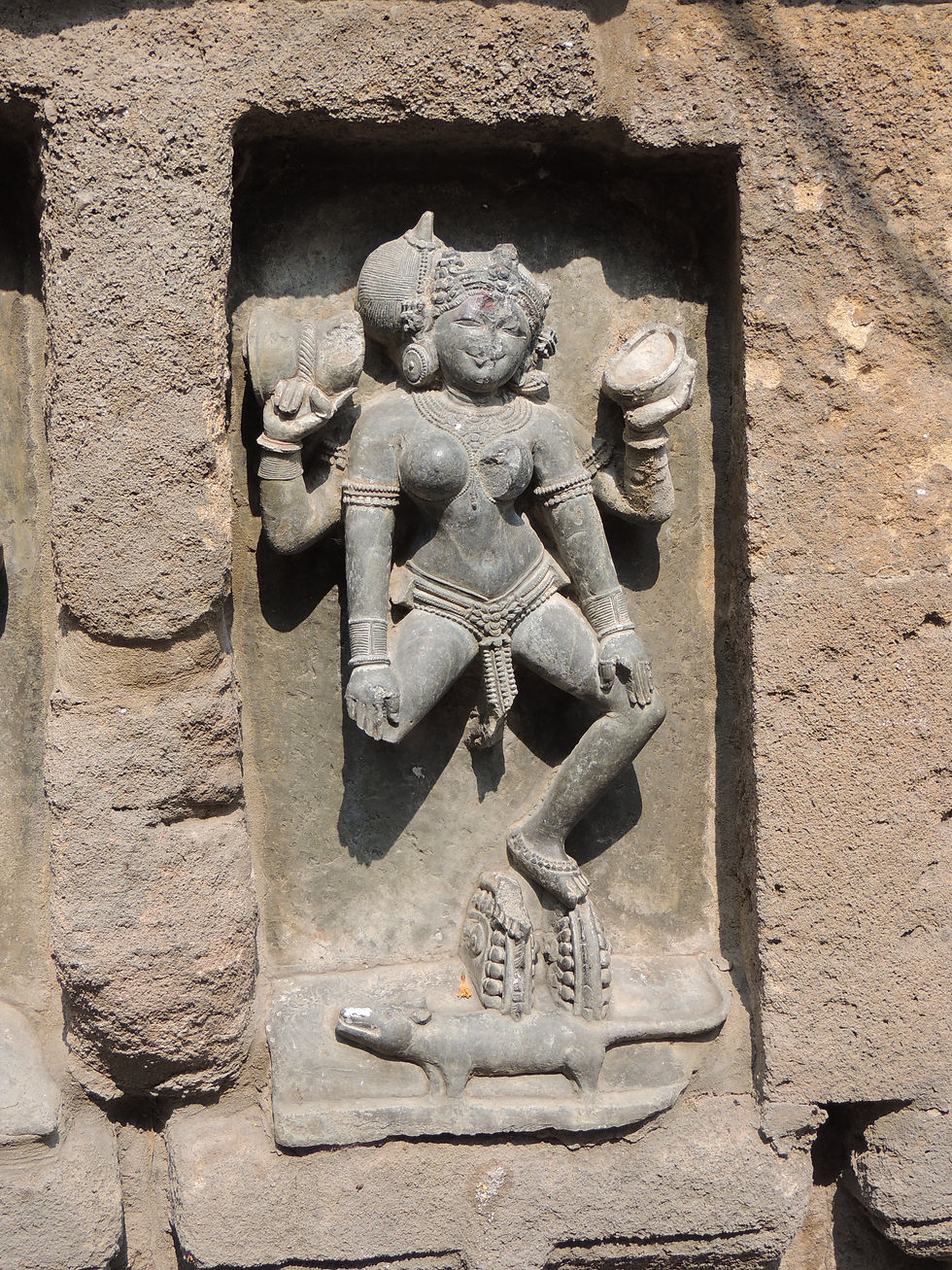
Another interesting one, holding a damru and kapala, on a rodent like creature. but what is interesting is that there appear to be wheels on the rodent she stands on!
She stands on a rooster

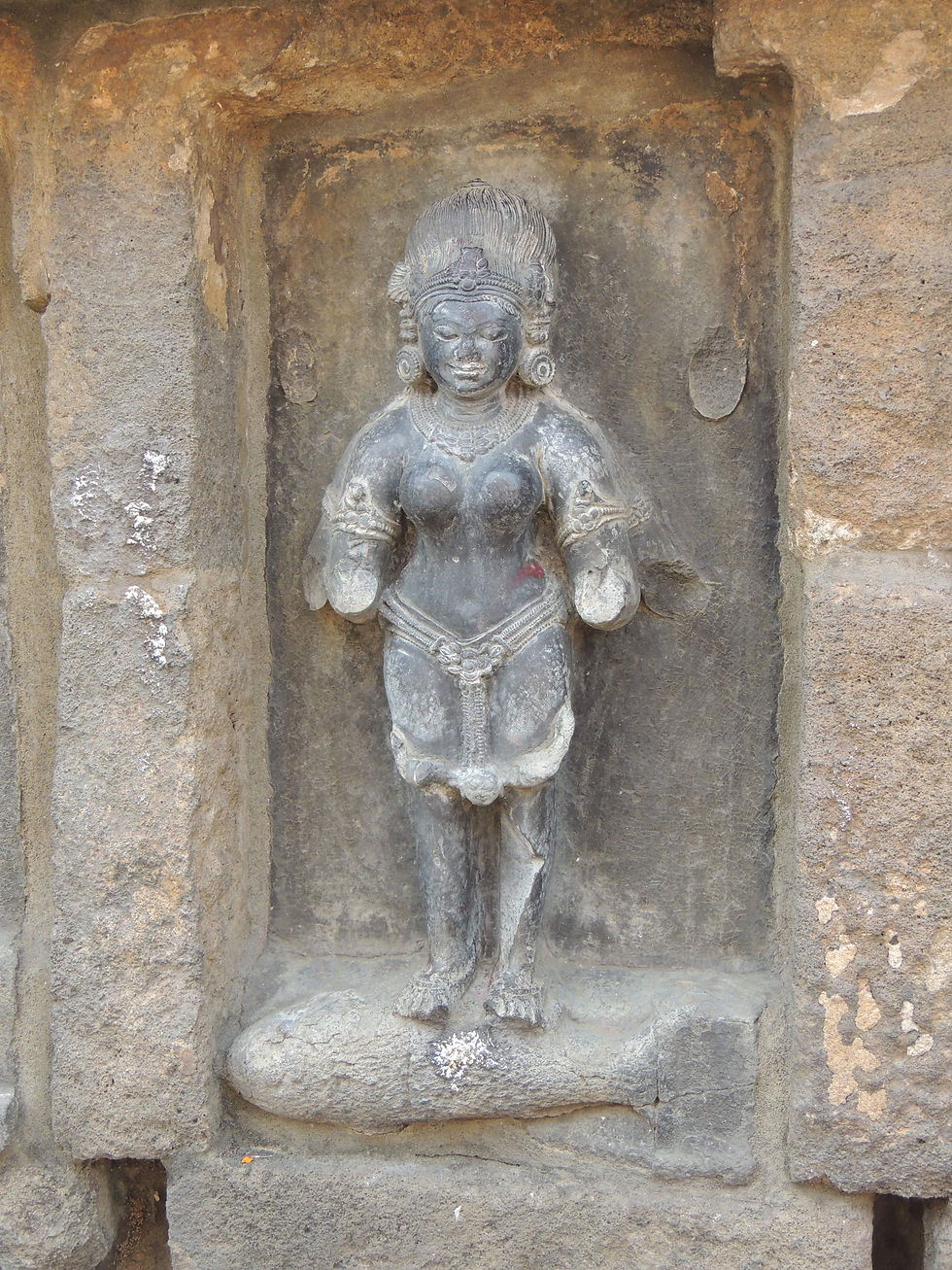
I picked her to share because of her hairstyle... unlike the other elaborate styles, she has curls, and such beautiful ones!
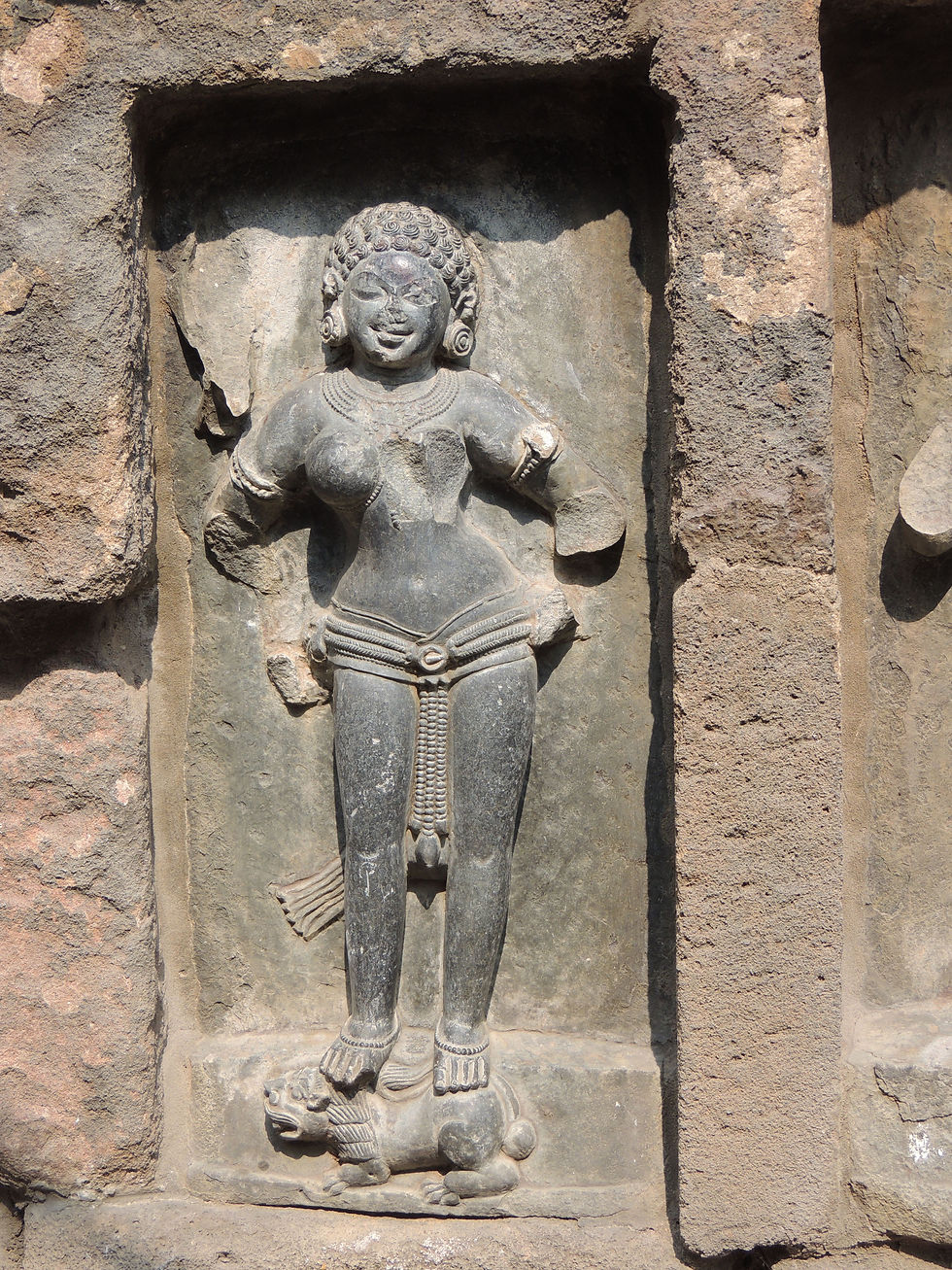
She stands on some kind of stand, but her eyes are on an object to her left... probably a vase or an instrument?

She stands on a human male, and holds a trishul... she reminds me of Kali, but look at her smiling face!

She has an elaborate hairstyle which seems to be like a crown, and she holds a coiled snake. But what is more interesting is that she is standing on what appears to be a lotus pond, complete with lotus flowers and fishes!

Another one with an instrument, this time she plays the drum

She stands on what appears to be a snail

One of the only figures with multiple heads, she has 3 heads, all topped by crowns

She has the face of a goat (I think)

Her face is damaged, and I am unable to identify the animal below her. But look at the pattern behind her. I wonder what it signifies.
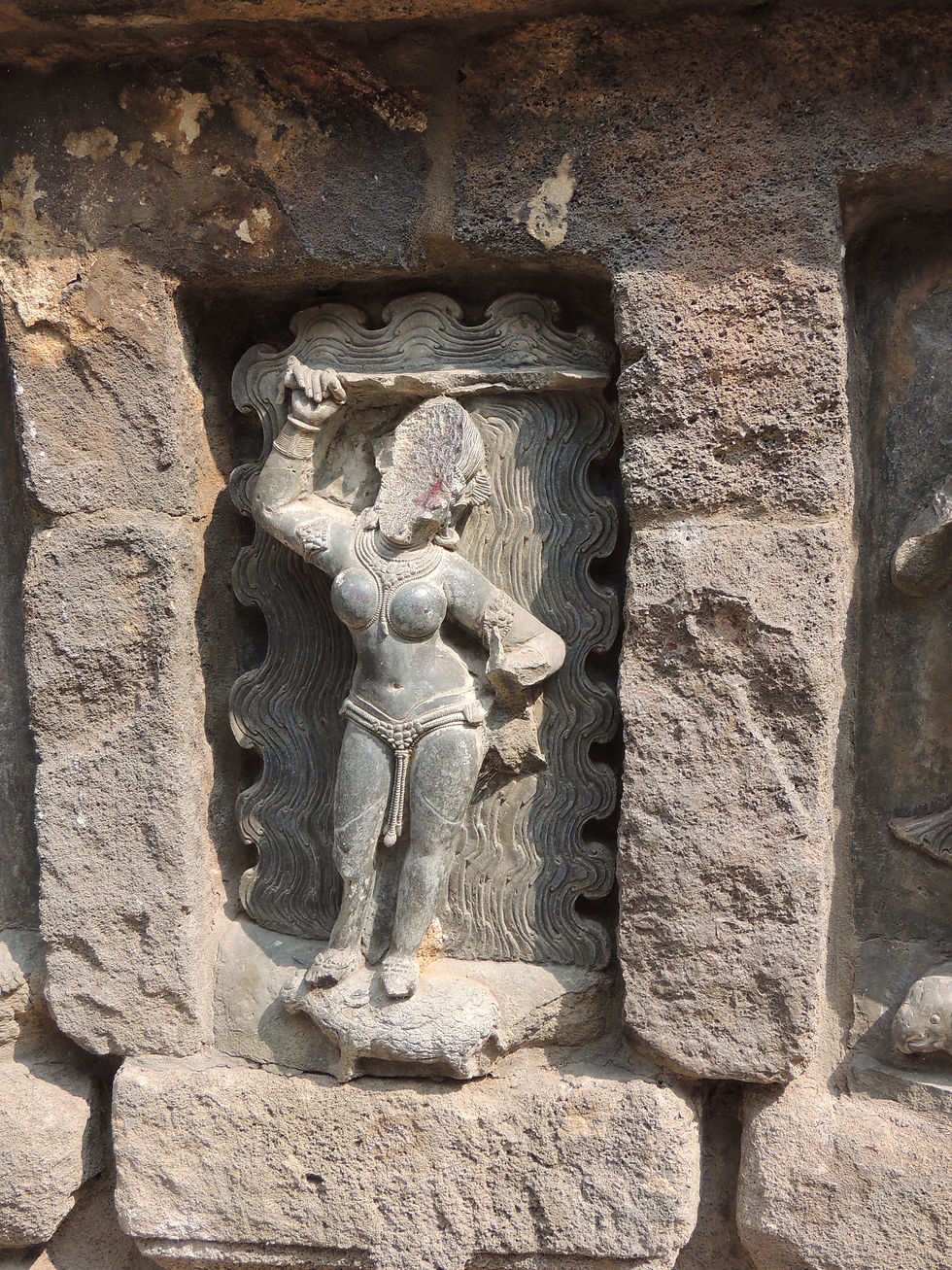
An amazingly gorgeous Chamunda on a fox, holding a lion above her

She stands on a parrot, and there was once something to her left. I wonder what it was

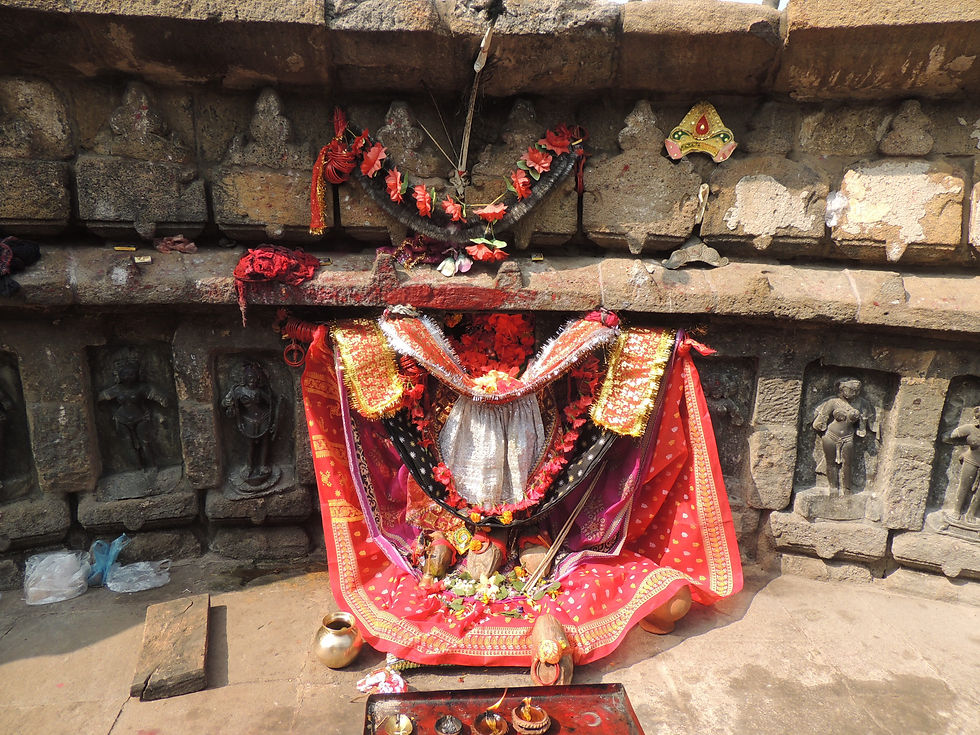
The central idol, believed to be Mahamaya, is completely covered, since she is under worship
It is interesting to see that all the Yoginis are the same size, and made in the same style, most probably by the same person. The architect would have decided the iconography based on the scriptures relevant to this temple, in this case the tantric texts. However, there are a few interesting points to note....
First, most of them have some connection to nature - birds, animals, trees, plants, water, etc.... This ties in with the idea of a temple open to the skies. They can be invoked inside the circular shrine, for a while, but they cannot be caged.. They are part of the world around, and return to nature when their work is done.
Second, they are in various poses... all of them standing, but the way they all stand is different... there is something untamed about how they stand, with no concern about decorum... and yet they are all incredibly graceful.
Third, they don't all look at the viewer... some seem to, but most of them look somewhere else.... their gaze is directed somewhere... I have wondered if this means something, and they were meant to gaze at some particular part of the temple, or if their gazes were directed at different angles with some purpose.
The central structure with the Bhairavas
One of the Bhairavas, with multiple arms, seated on a lotus with a human male below him.

Ekapada Bhairava, standing on a single leg... a very unusual depiction, one which I have only seen in the South so far
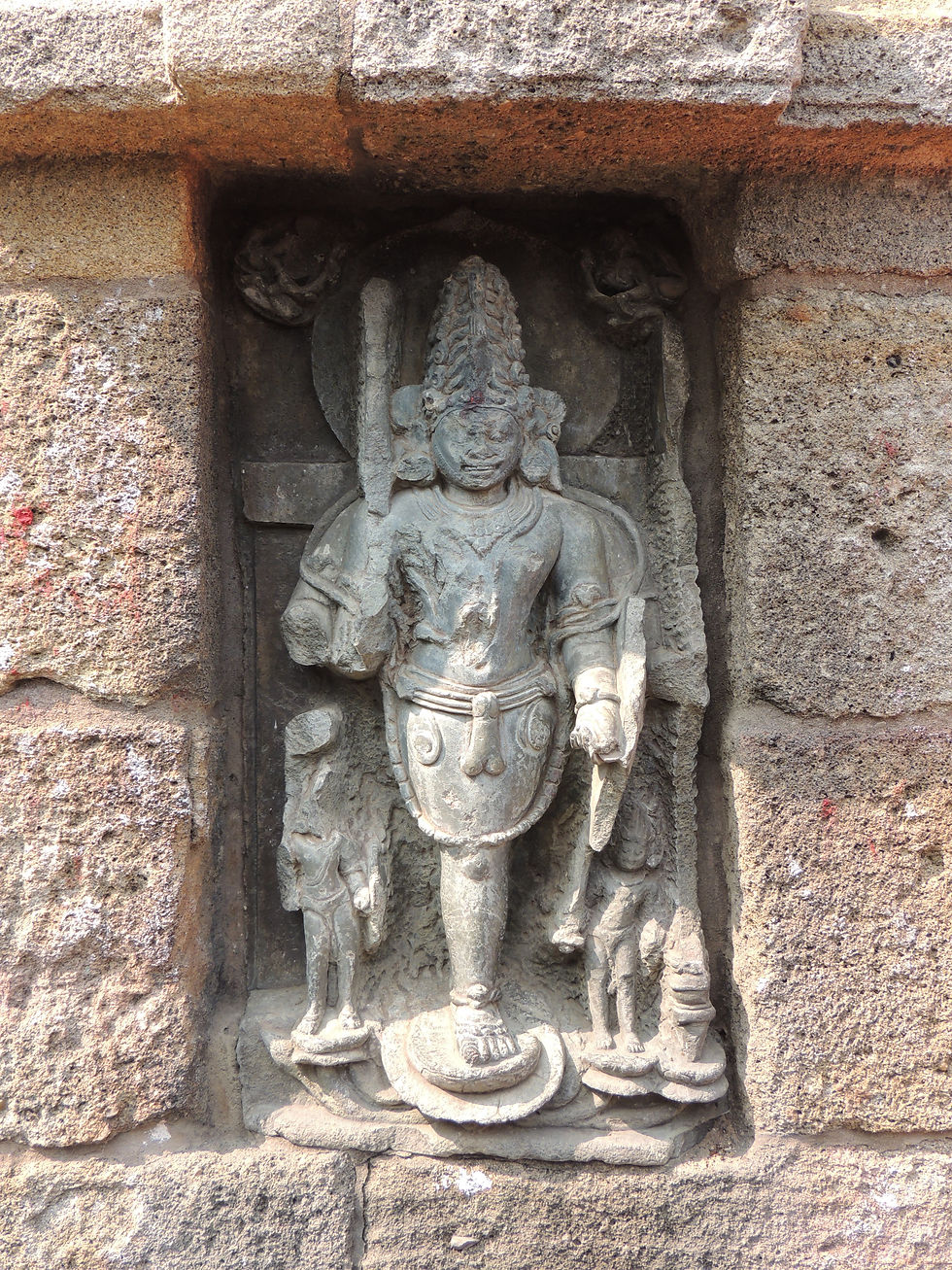
Another seated Bhairava
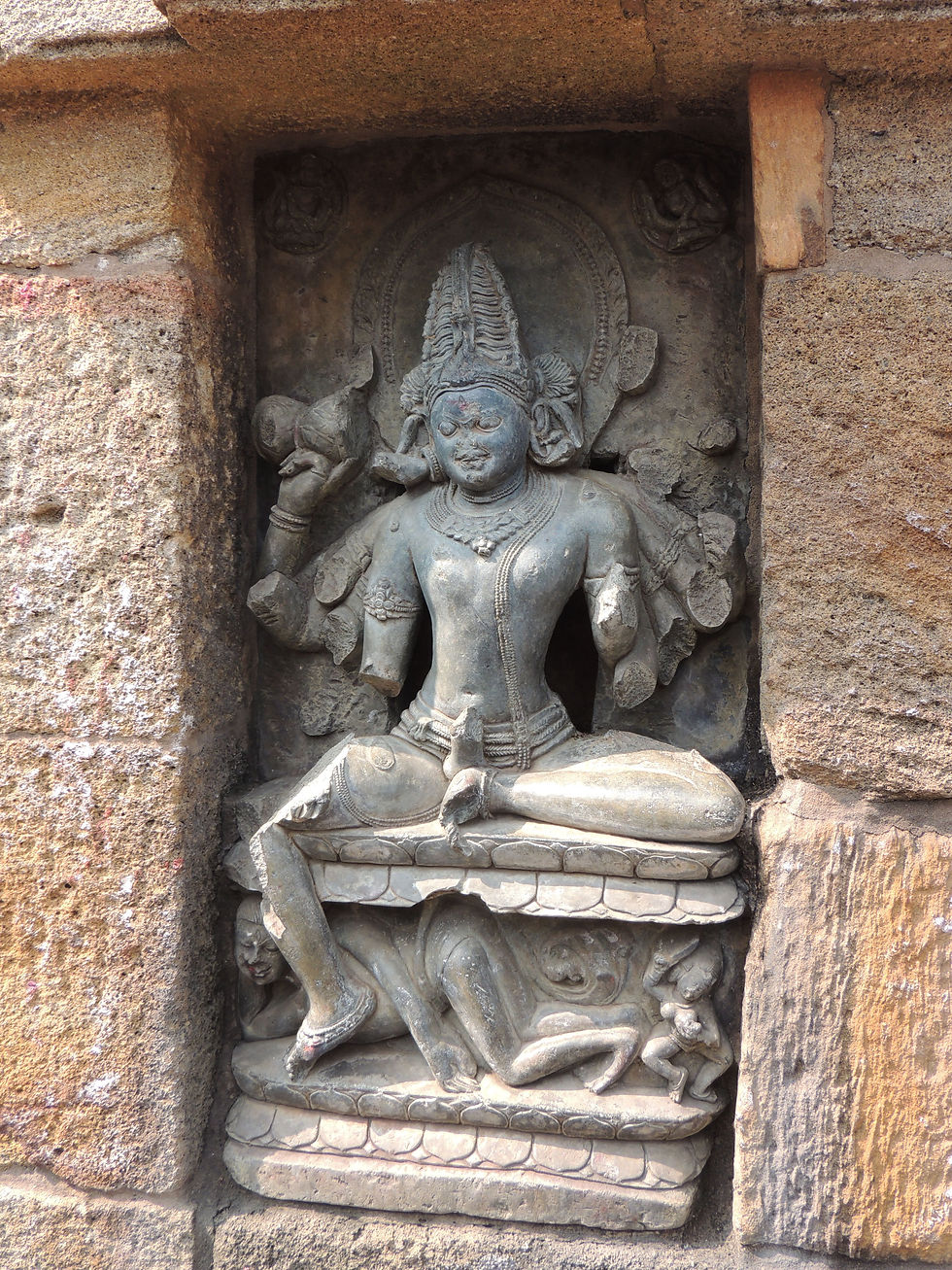
One of the figures on the outside wall of the temple
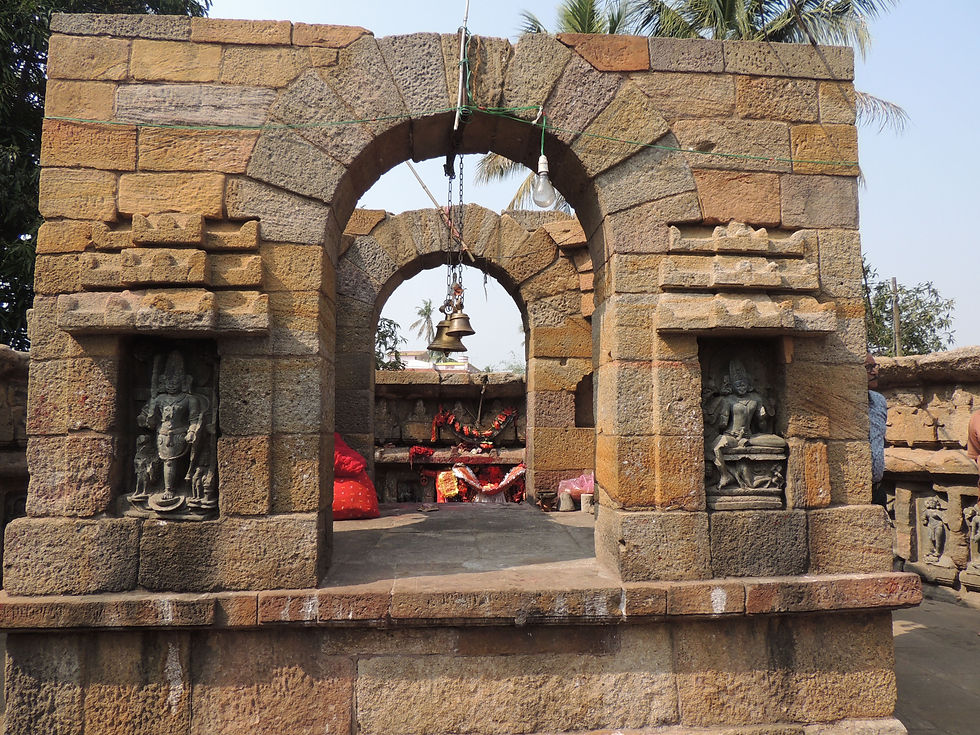
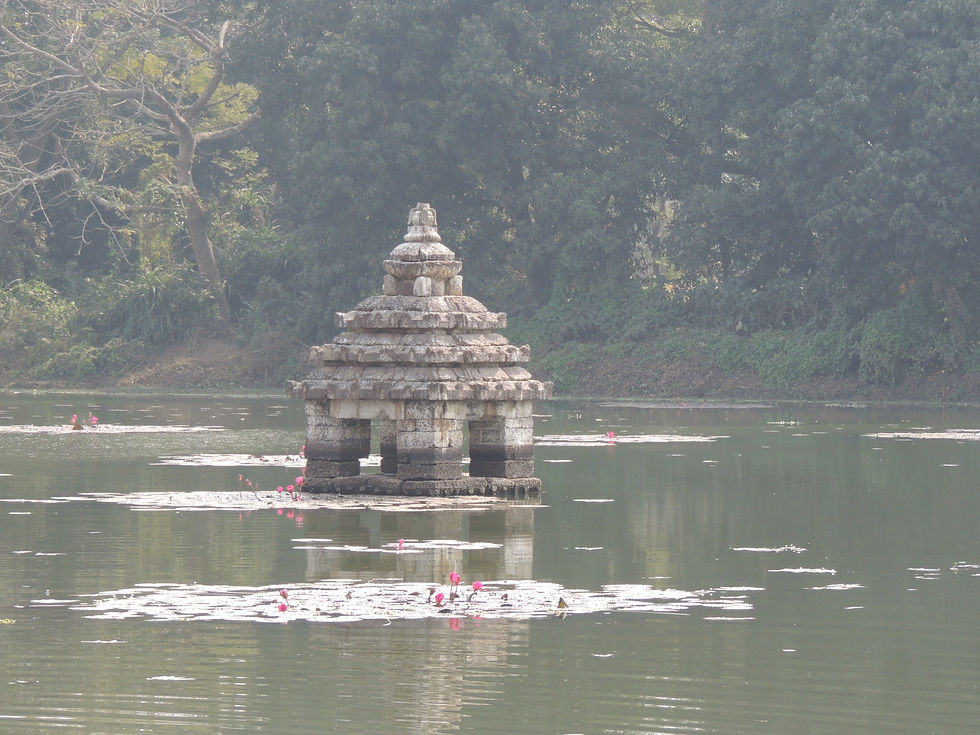
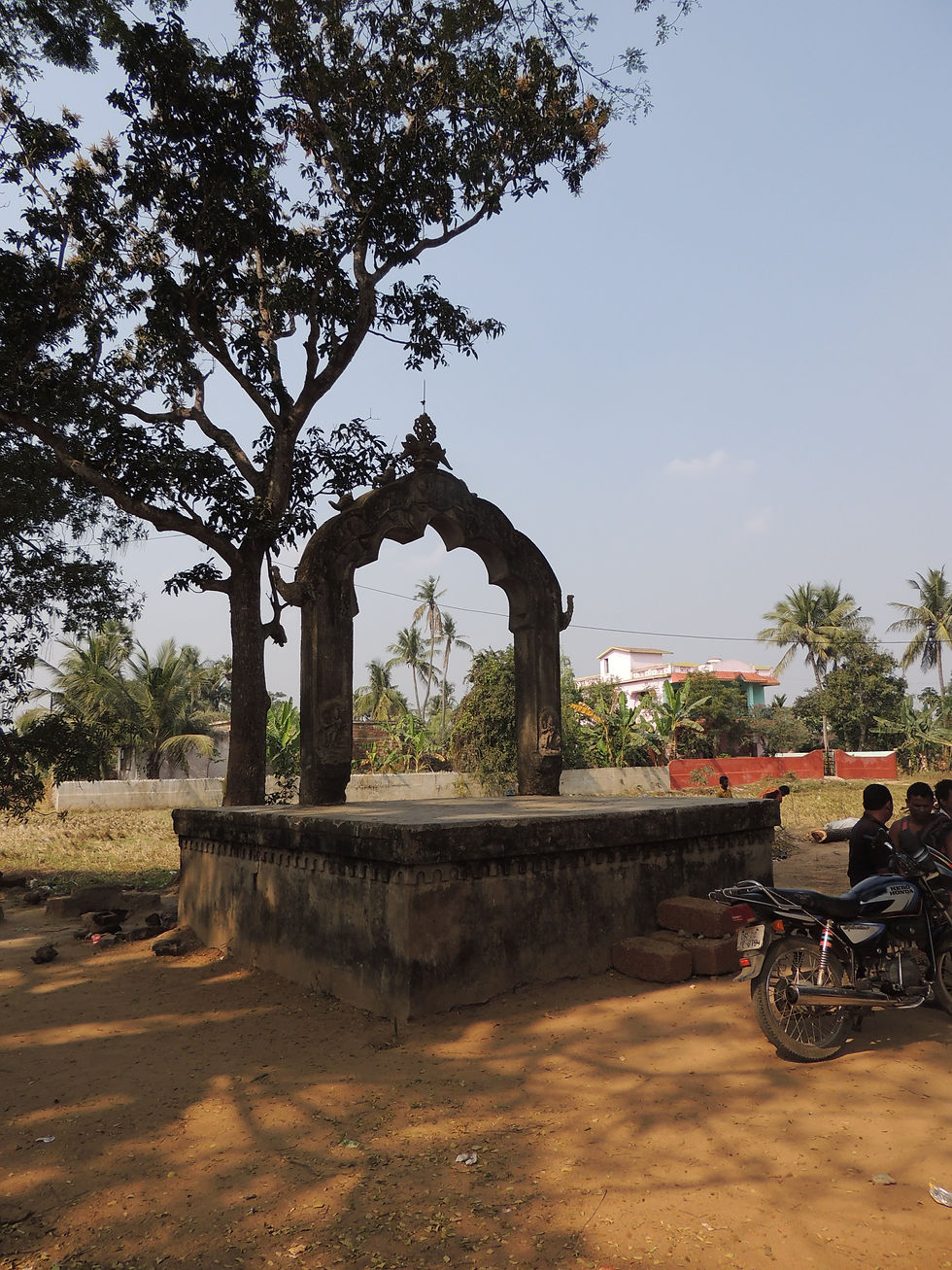
There are two structures outside the temple which made me think of the rituals performed here. The first is a mandapa built in the centre of a pond by the side of the temple, and the second is an arch over a platform on the other side of the temple. I wonder if these places were built at some later period for performing rituals....
The temple was almost deserted, and while a couple of people walked in while I was there, I had the whole place to myself. Back when I had visited my first Yogini temple at Mitawali, I had felt an eerie sense of being watched, a presence I could not explain. It wasn’t a threatening feeling, but a feeling of something otherworldly. This small temple was nowhere near as deserted as that one. There was a priest, there were indications of regular prayers, and a few people walked in and out while I was busy photographing. And yet, there was the same sense of a presence. A benign presence, not a threatening one, despite all the stories that I had been told. This time, I embraced that sense of presence, lingering in the temple, going round and round, looking at the Yoginis and Bhairavas, simply enjoying the beauty of this, the smallest temple I have ever visited.
Fast forward to my recent trip, in June 2025. I wanted to introduce Samhith to this unique temple, and my driver this time happily took us without a murmur. Visiting the temple after 8 years, I wondered how much the temple had changed.
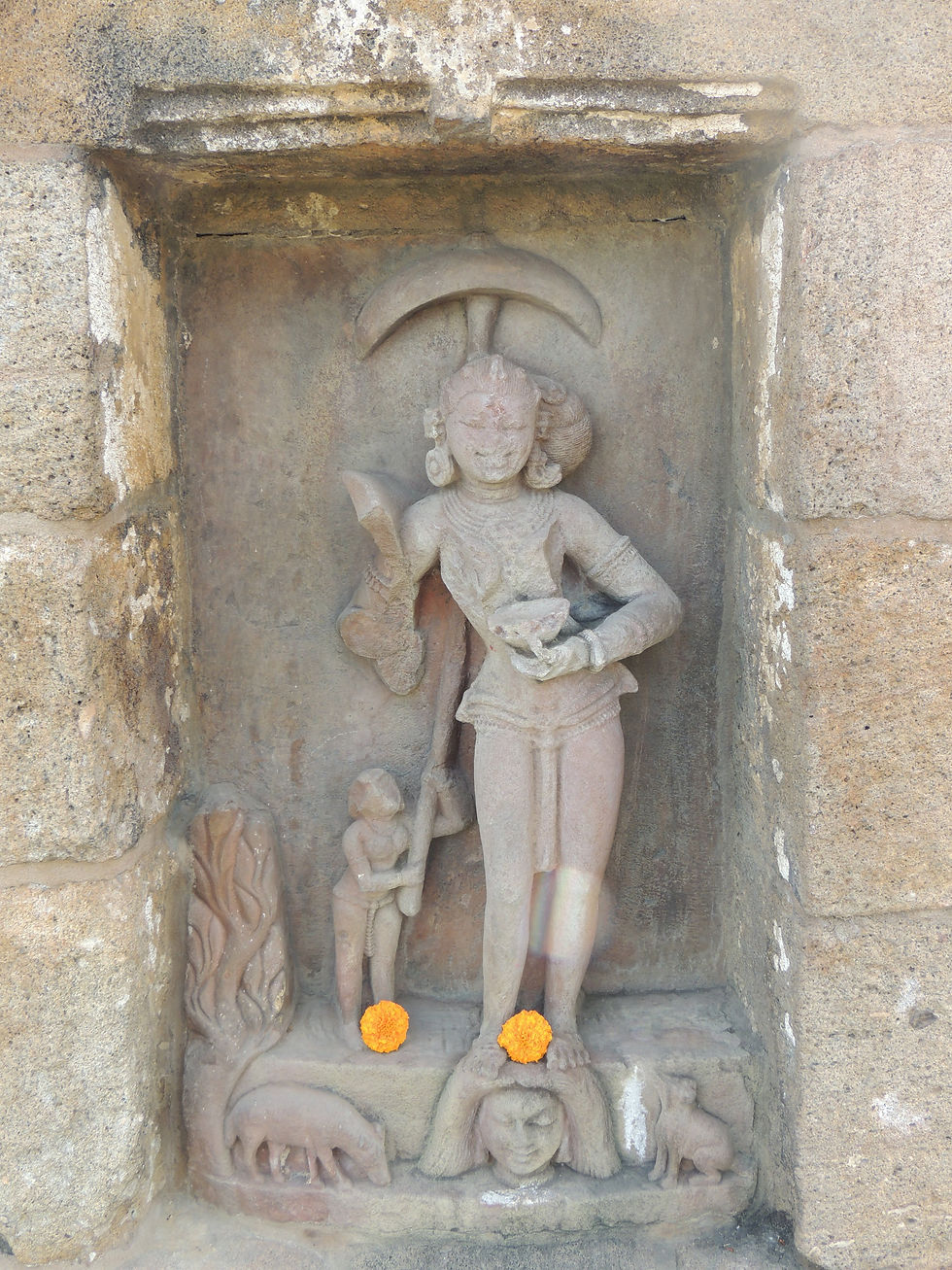
The temple was just as gorgeous as ever, and much as I loved seeing it again, the presence I felt the last time was missing… probably because the temple has now been discovered by tourists. There were multiple cars parked outside when we arrived, and a priest was busy offering prayers on behalf of a group of visitors… not to the Yoginis, but to an idol of an unidentifiable deity standing outside. The lone sculpture has been so covered with clothes, that it was impossible to see which deity it represented. It was interesting, however, to note that the deity wore footwear, like the sandals worn by Bhikshatanamurthi in South India. Further, the panel below the sculpture shows two bulls, so I wouldn’t be surprised if it was indeed Shiva.

I first learnt about the Yogini temples at Jnanapravaha Mumbai, when I did their Indian Aesthetics course. That led to reading the book by Dr. Vidya Dehejia, the definitive work on the Yogini temples, and the desire to see at least some of them, grew. Over the years, I have been able to visit 4 of them… here are links to the related posts in case you wish to read further.
Information
The Hirapur Yogini temple is located around 20 Km from Bhubaneshwar.
You can easily visit it en route to Bhubaneshwar from Puri, or the other way around.
Other posts on Odisha -


Comments