The Hindu and Buddhist history of Odisha , or rather, ancient Kalinga, is rather well known to everyone. Who hasn’t heard of the grand temples of Odisha – Puri, Lingaraj and Konark, or the great war of Kalinga which inspired Ashoka to convert to Buddhism? In contrast, very few know of the Jaina heritage of this region. This is quite a pity, since, just around 7 km from the city, is one of India’s most ancient inscriptions, which throws light on the Jaina heritage of Odisha. This inscription is the Hathigumpha inscription of Kharavela, in the hills of Udaygiri. Udaygiri and Khandgiri are two hills located opposite each other, and both are testaments to the rich Jaina heritage of Odisha. The caves at Udaygiri are older, while Khandgiri is relatively newer, but has lasted much longer, and continues to be a place of pilgrimage for Jains even today. These hills, from inscriptions and excavations of caves, shrines and rock beds, appear to have been a haven for Jaina monks, right from the ...
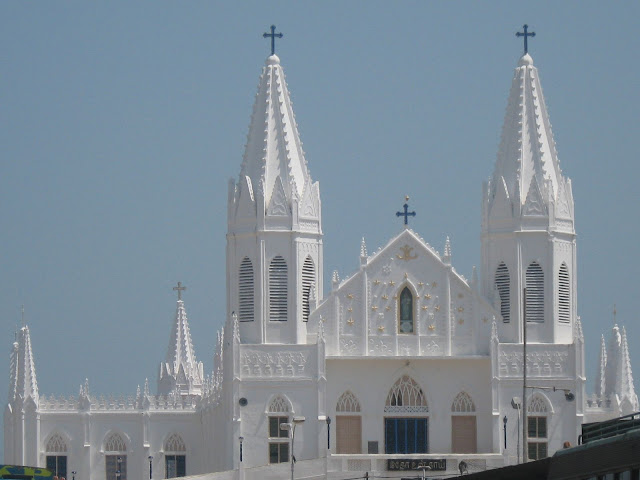
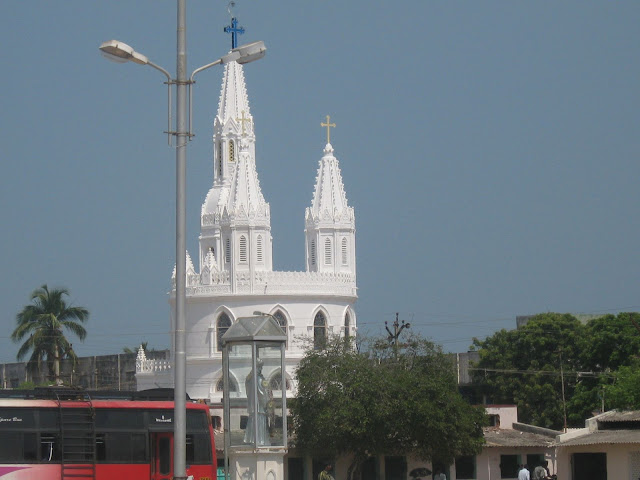
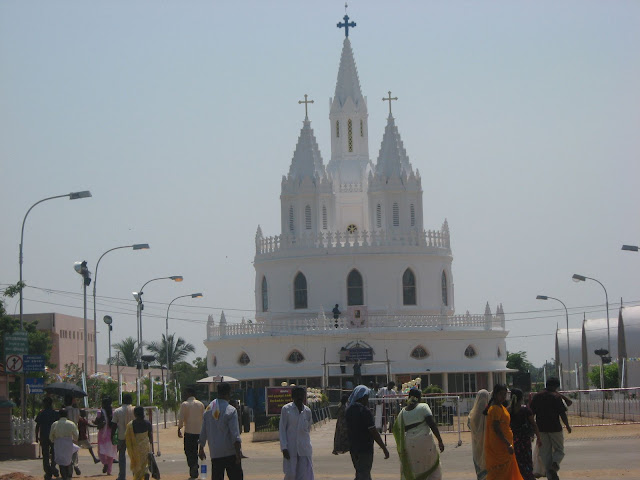
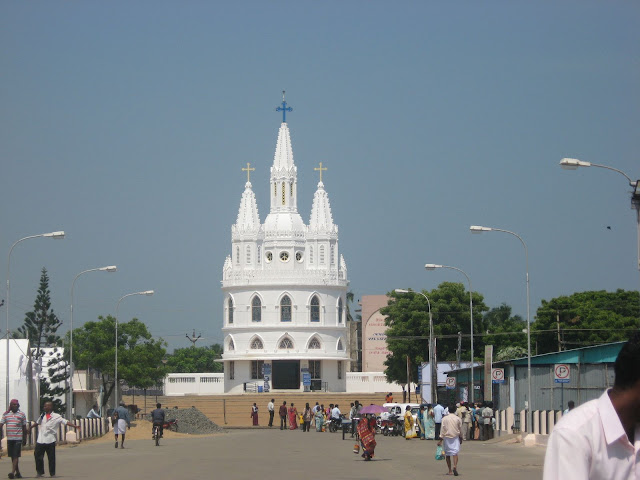
The main reason for our trip to Thanjavur was to visit temples. We visited a number of temples around Thanjavur, Kumbakonam, Mayiladudurai and Thiruvarur. There were only two exceptions to this – the Nagore Dargah, where we did not enter, as it was terribly crowded, and the Church at Velankanni where we offered candles, salt and pepper like thousands of other devotees who were also there like us.
Having studied in a convent school, going to church, for me has always been a wonderful experience. The calm and quiet environs of a church attract me as much as the cymbals and gongs in a temple do. I had long wanted to visit the church of the holy mother at Velankanni, and this Diwali, my wish was finally fulfilled.
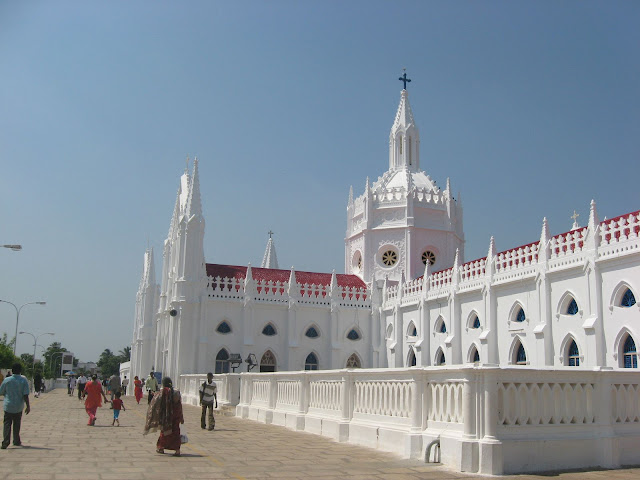
Velankanni is situated 12 Kms south of Nagapattinam, and is a beach town. The church is huge, and the authorities have used the surrounding land well to provide facilities for pilgrims. Details about the church, accommodation, routes, etc. are all available on the website of the church, which is quite well maintained.
Here is a photoblog of Velankanni.
 |
| From Diwali 08 - Thanjvur Trip |
Having studied in a convent school, going to church, for me has always been a wonderful experience. The calm and quiet environs of a church attract me as much as the cymbals and gongs in a temple do. I had long wanted to visit the church of the holy mother at Velankanni, and this Diwali, my wish was finally fulfilled.
Velankanni is situated 12 Kms south of Nagapattinam, and is a beach town. The church is huge, and the authorities have used the surrounding land well to provide facilities for pilgrims. Details about the church, accommodation, routes, etc. are all available on the website of the church, which is quite well maintained.
Here is a photoblog of Velankanni.
 |
| From Diwali 08 - Thanjvur Trip |
 |
| From Diwali 08 - Thanjvur Trip |
|
| From Diwali 08 - Thanjvur Trip |
 |
| From Diwali 08 - Thanjvur Trip |
 |
| From Diwali 08 - Thanjvur Trip |
 |
| From Diwali 08 - Thanjvur Trip |
 |
| From Diwali 08 - Thanjvur Trip |
 |
| From Diwali 08 - Thanjvur Trip |
Good work! Just evoked my memories! :)
ReplyDelete