The Vaital temple is of the many intriguing temples in Bhubaneshwar. To begin with, the structure itself resembles a South-Indian temple more than the typical Kalingan style that we see everywhere else in Odisha. The temple has been dated to the last quarter of the 8 th century CE. Further , unlike most of the temples in Bhubaneshwar, this temple is not dedicated to Lord Shiva. Inside the sanctum is one of the deities who is very rarely seen in a sanctum – Chamunda, along with the Saptamatrikas. This is evidently a Shakta shrine. However, the presence of Lakulisha on the vimana indicates the connection with the Pasupata sect, which is most prevalent in this region during this time period. Further, the name of the temple – ‘Vaital’, comes from the word ‘ vetala’ , referring to spirits, which were invoked by tantrics to attain siddhis. Thus, this temple is an amalgamation of Pasupata and Shakta philosophy, with a strong emphasis on tantric rituals, and this is reflected in the iconogra...
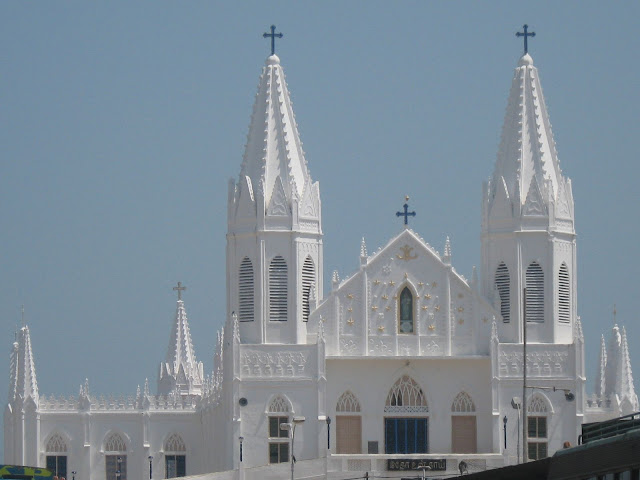
The main reason for our trip to Thanjavur was to visit temples. We visited a number of temples around Thanjavur, Kumbakonam, Mayiladudurai and Thiruvarur. There were only two exceptions to this – the Nagore Dargah, where we did not enter, as it was terribly crowded, and the Church at Velankanni where we offered candles, salt and pepper like thousands of other devotees who were also there like us.
Having studied in a convent school, going to church, for me has always been a wonderful experience. The calm and quiet environs of a church attract me as much as the cymbals and gongs in a temple do. I had long wanted to visit the church of the holy mother at Velankanni, and this Diwali, my wish was finally fulfilled.
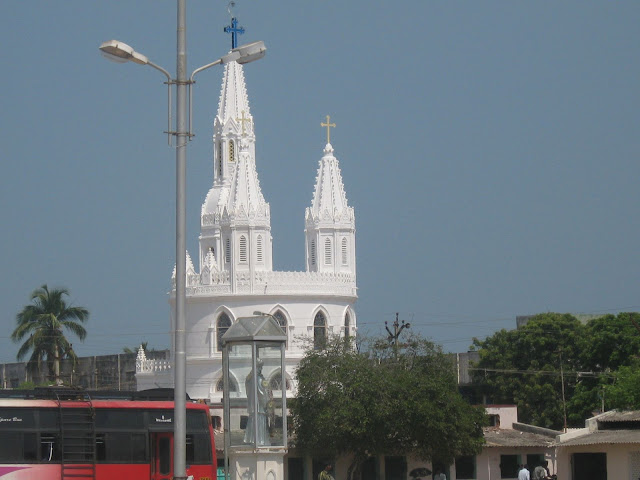
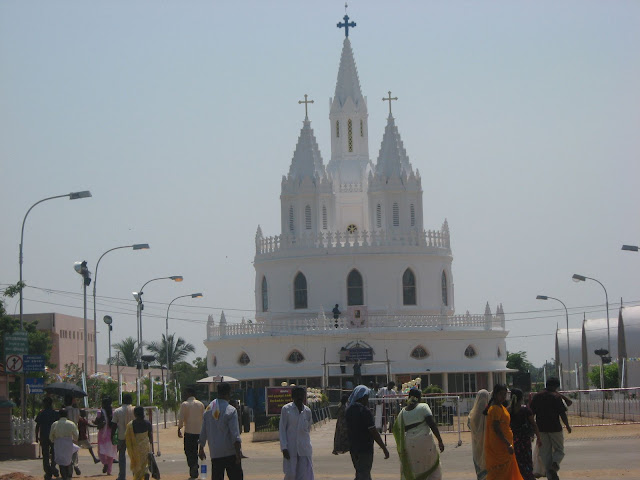
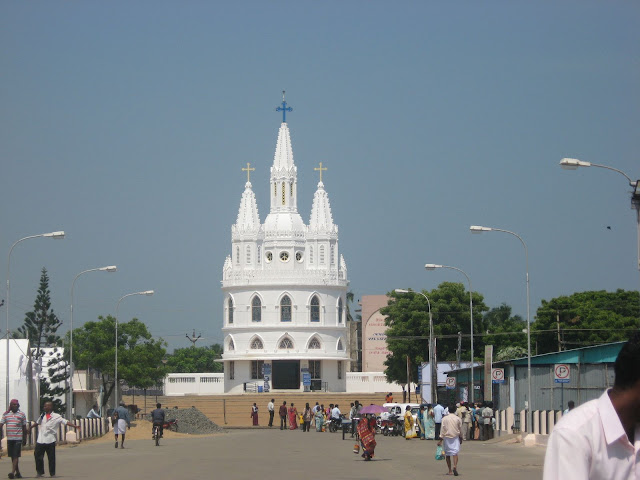
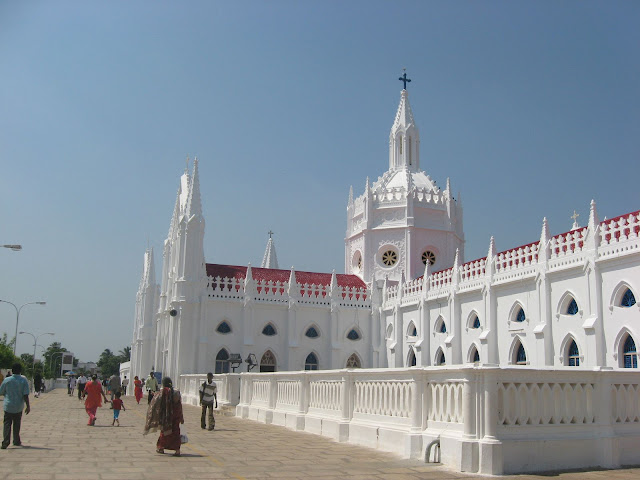
Velankanni is situated 12 Kms south of Nagapattinam, and is a beach town. The church is huge, and the authorities have used the surrounding land well to provide facilities for pilgrims. Details about the church, accommodation, routes, etc. are all available on the website of the church, which is quite well maintained.
Here is a photoblog of Velankanni.
 |
| From Diwali 08 - Thanjvur Trip |
Having studied in a convent school, going to church, for me has always been a wonderful experience. The calm and quiet environs of a church attract me as much as the cymbals and gongs in a temple do. I had long wanted to visit the church of the holy mother at Velankanni, and this Diwali, my wish was finally fulfilled.
Velankanni is situated 12 Kms south of Nagapattinam, and is a beach town. The church is huge, and the authorities have used the surrounding land well to provide facilities for pilgrims. Details about the church, accommodation, routes, etc. are all available on the website of the church, which is quite well maintained.
Here is a photoblog of Velankanni.
 |
| From Diwali 08 - Thanjvur Trip |
 |
| From Diwali 08 - Thanjvur Trip |
|
| From Diwali 08 - Thanjvur Trip |
 |
| From Diwali 08 - Thanjvur Trip |
 |
| From Diwali 08 - Thanjvur Trip |
 |
| From Diwali 08 - Thanjvur Trip |
 |
| From Diwali 08 - Thanjvur Trip |
 |
| From Diwali 08 - Thanjvur Trip |
Good work! Just evoked my memories! :)
ReplyDelete