The Rajarani Temple in Bhubaneshwar gets its name from the stone used to build it - the red and yellow sandstone used here is locally called Rajarani. This temple was once known as the Indreshwara temple, which is mentioned in the Ekamra Purana, which tells us about the temples of Bhubaneshwar, which was then known as Ekamra Kshetra. Today, the temple stands in a well-maintained lawn, and is the only ticketed monument within the city. The temple is built in the typical Kalinga style, with the tall curvilinear shikara over the garbagruha , and a jagamohana connected to it. The temple is believed to date back to the 11 th century, and is most well known for its sculptures. The entrance to the temple has two pillars with a Naga couple protecting the sanctum, holding garlands in their hands. The base of the pillar shows 3 lions standing over 3 elephants, a typical motif in temples of this region during this period. On the other side of the pillar is a horse and rider, and the two mo...
Now that I have finished writing about Gwalior, it is time to move out, to all the other interesting places around. However, before I begin my posts on the sites around Gwalior, which are going to be all about our built heritage, it is time to take a break to look at our natural heritage, just waiting to be seen around us... like birds, for example!
I can’t remember the last time I went bird-watching. But, wherever I go, I do see birds... lots of them. The Gwalior trip was no different, and we frequently stopped, on the road as well as within the fort, hearing the call of some bird. It surely irritated our guides and our drivers, and while some grumbled, others simply stared at us in astonishment! These birds aren’t exotic, and they aren’t rare. Yet, it’s always a delight to see them, which is why deserve a post to themselves! And so, here are some birds we saw, in and around Gwalior!
I can’t remember the last time I went bird-watching. But, wherever I go, I do see birds... lots of them. The Gwalior trip was no different, and we frequently stopped, on the road as well as within the fort, hearing the call of some bird. It surely irritated our guides and our drivers, and while some grumbled, others simply stared at us in astonishment! These birds aren’t exotic, and they aren’t rare. Yet, it’s always a delight to see them, which is why deserve a post to themselves! And so, here are some birds we saw, in and around Gwalior!
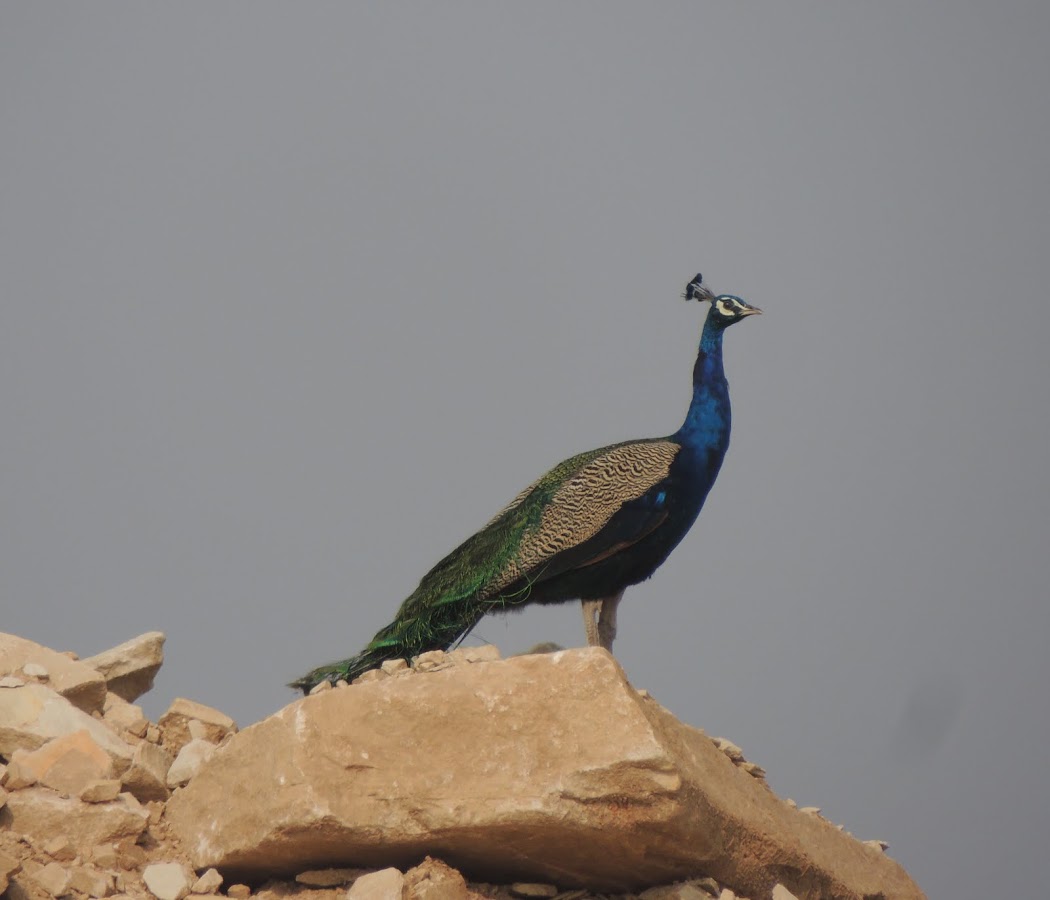 |
| Peacocks we saw in plenty, almost everywhere we went. But this one was the best. He posed so beautifully atop the rock, somewhere on the road near Gwalior |
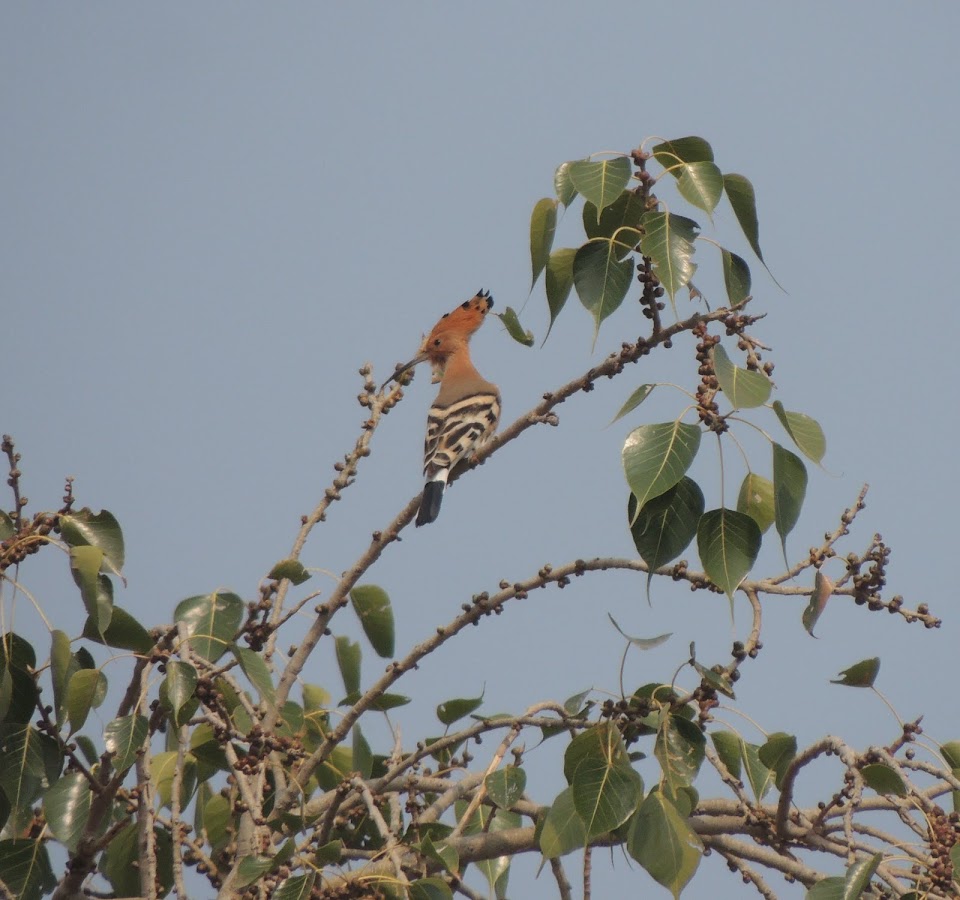 |
| We spotted this Hoopoe at the Gwalior Fort, as we explored the monuments. Our guide and a group of French tourists were surprised to see me pay so much attention to the bird! The guide actually paused his narration to glare at me! |
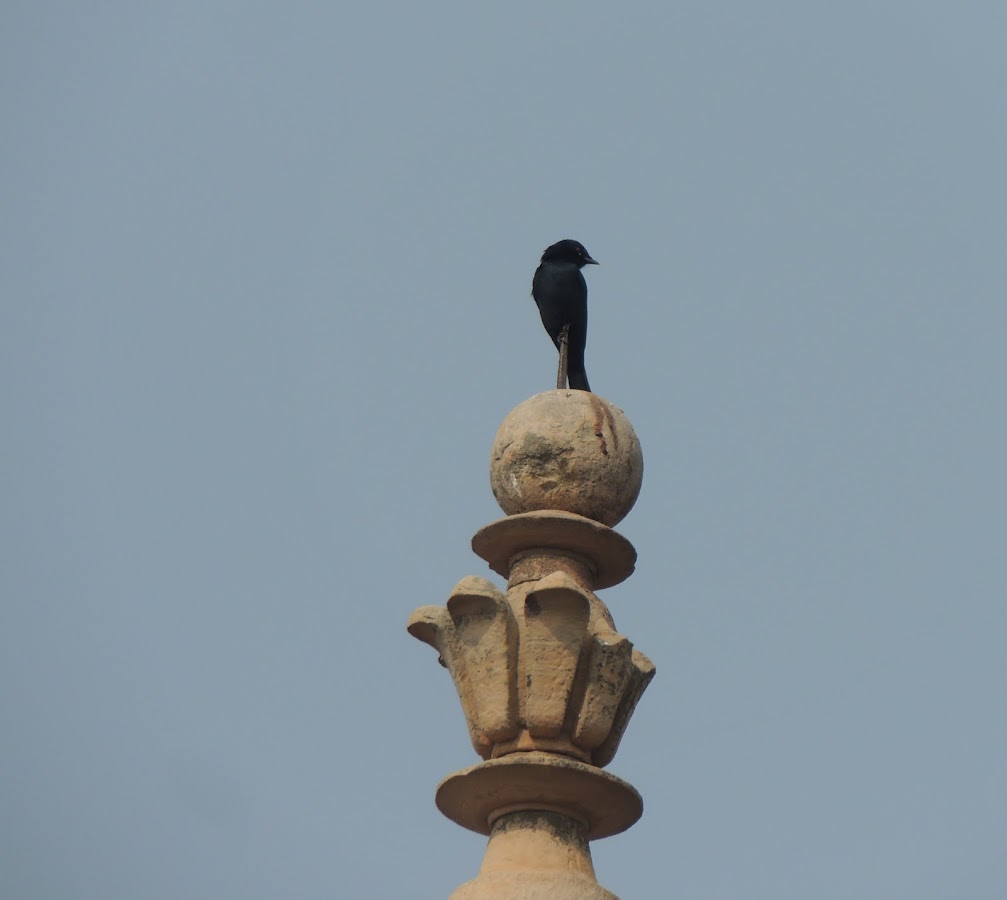 |
| This Drongo was such a beautiful sight, perched on the finial of one of the monuments. This time, the guide didn't even bother to glare. He had given up! |
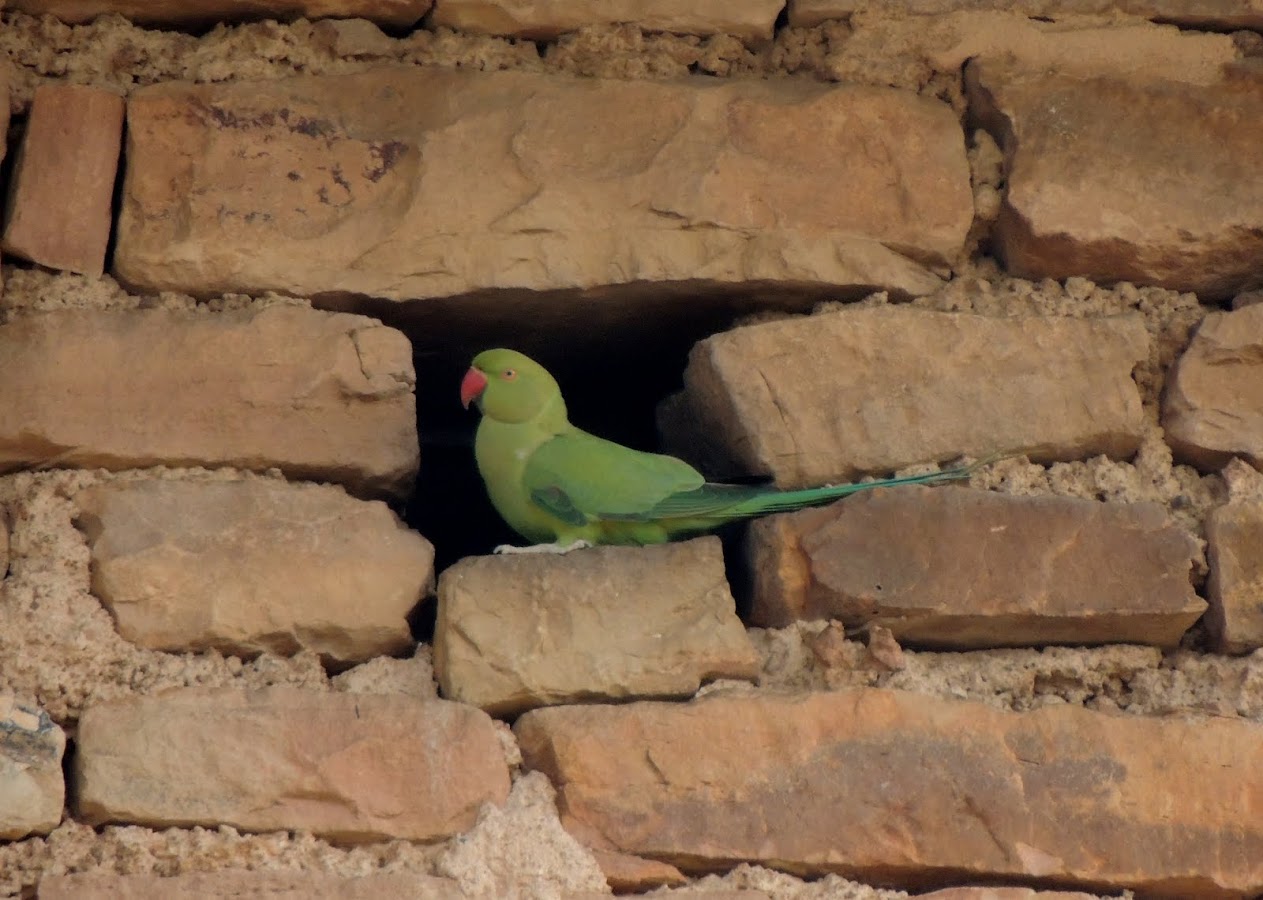 |
| An entire flock of parakeets living in the wall of the Vikram Mahal created a racket while we were walking around. We, of course, were happy to click them, lagging behind while the others moved on, giving up on us, and our fascination for birds! |
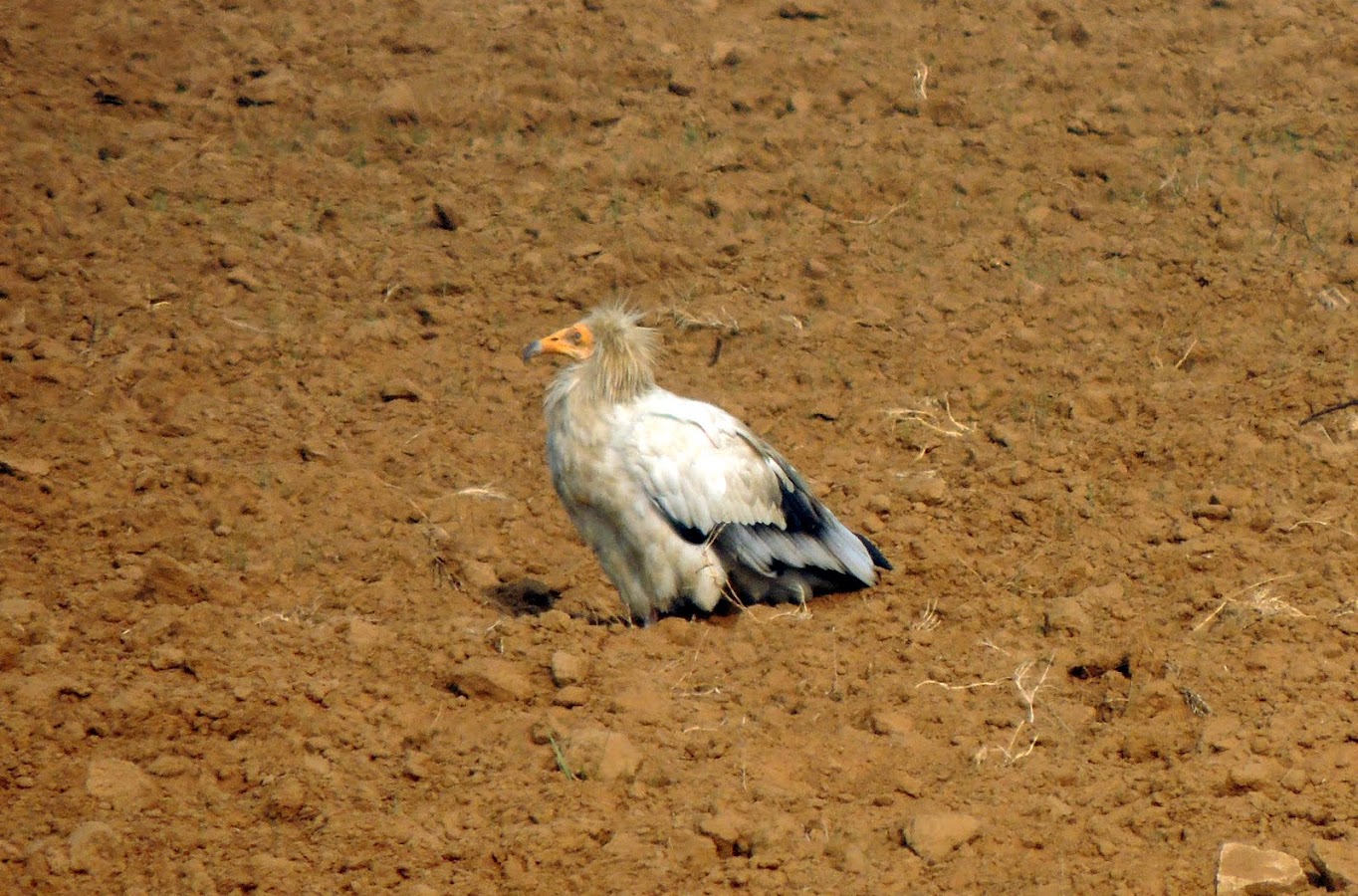 |
| Samhith spotted this Egyptian Vulture in a field as we were driving to Batesar. Our driver was too surprised and stunned that we actually wanted him to drive back a little to photograph a bird! He looked on, amused, as we clicked and clicked.... |
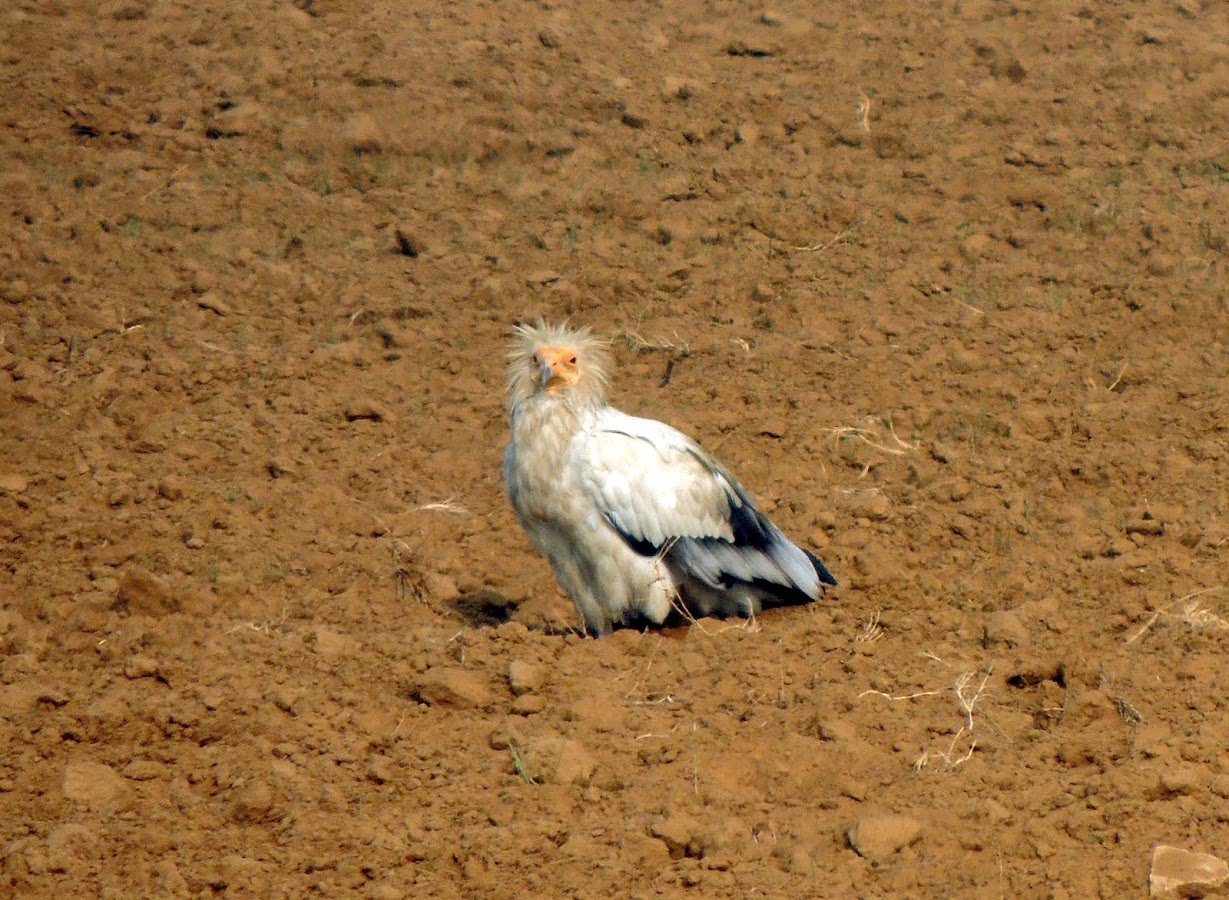 |
| The bird finally becomes aware of us, and the attention it generated! |
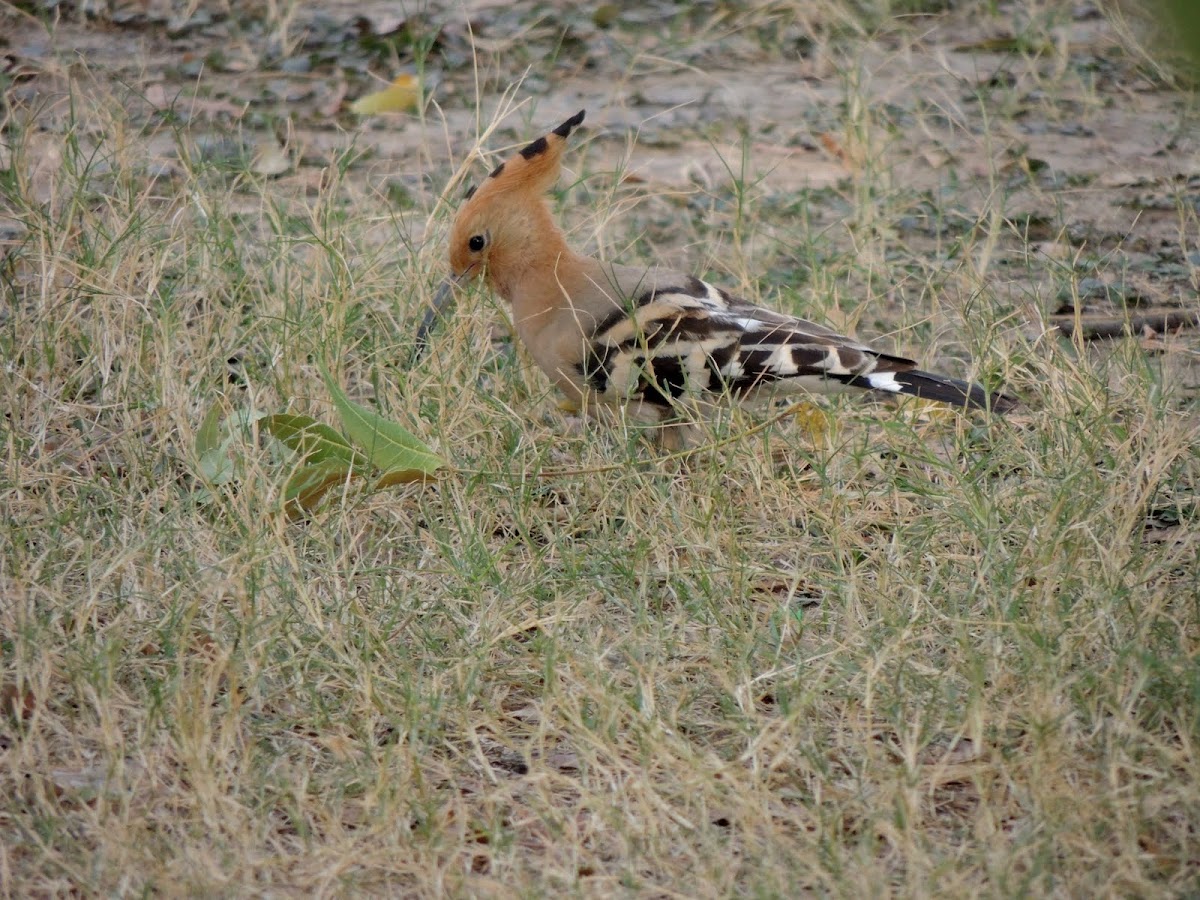 |
| Another Hoopoe, this time in the grass |
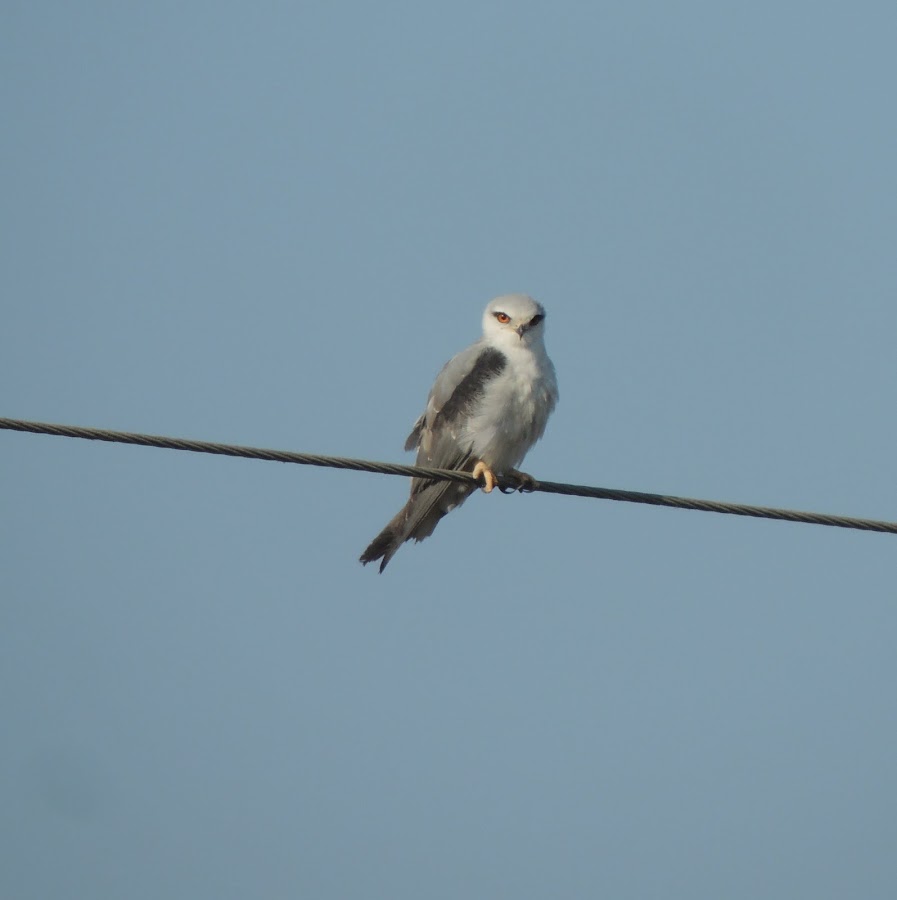 |
| And finally, the highlight of the day.... a bird of prey... Unfortunately, I have not been able to conclusively identify this bird, so any help will be appreciated. |

Thanks a lot I really enjoyed the picture
ReplyDeleteI believe the last pic of that beautiful raptor is a black-shouldered kite. Such a striking-looking bird! But most raptors are, aren't they? :)
ReplyDeleteLove your bird pics! Hope you get a chance to dedicate some time to bird watching again soon. It was fun to see the Egyptian vulture - they are so very different than the vultures we have in our area.
Wonderful shots of beautiful birds.
ReplyDeleteWonderful shots of beautiful birds.
ReplyDeleteWhite shouldered kite...the last one....a very beautiful Bird...
ReplyDeleteOnce I had seen a huge group of Yellow Wattled Lapwing in Gwalior University ground :)